
Last updated November 15, 2026
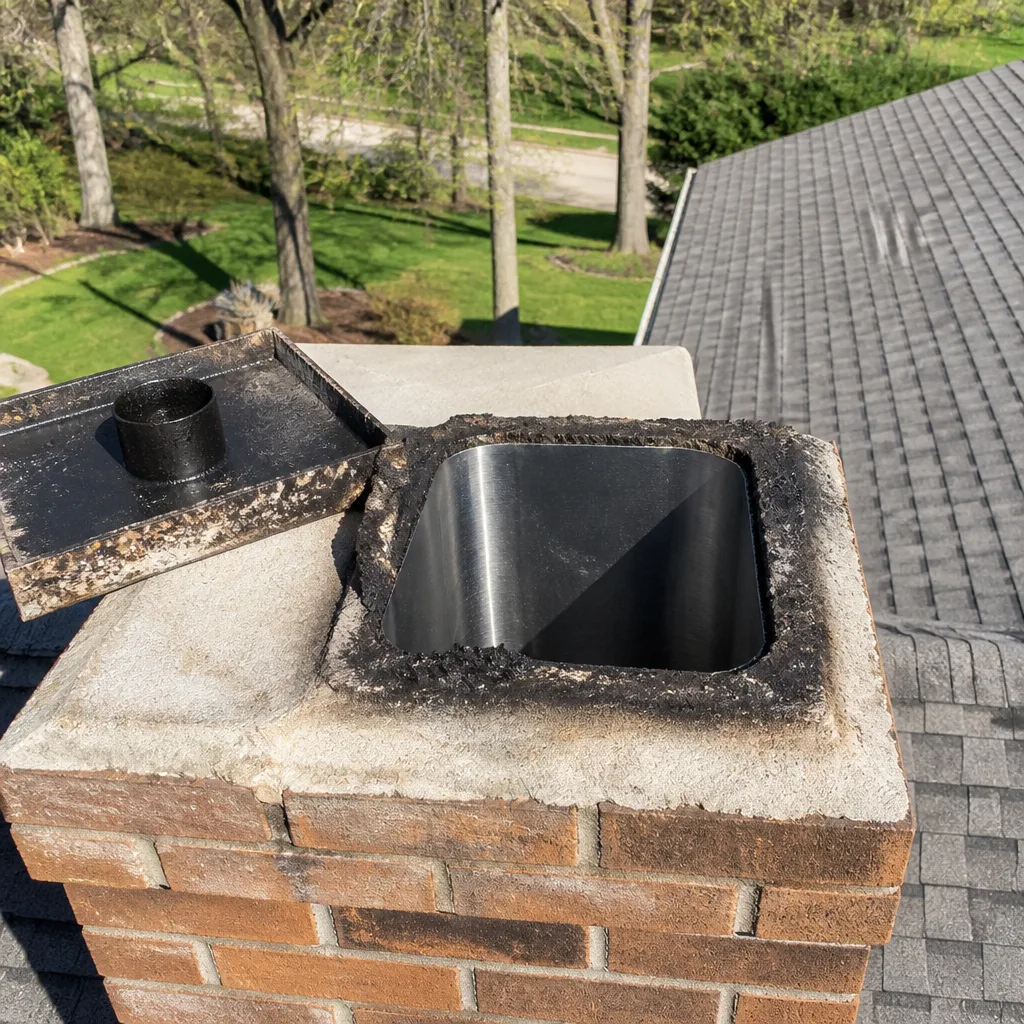 Sweep & inspection
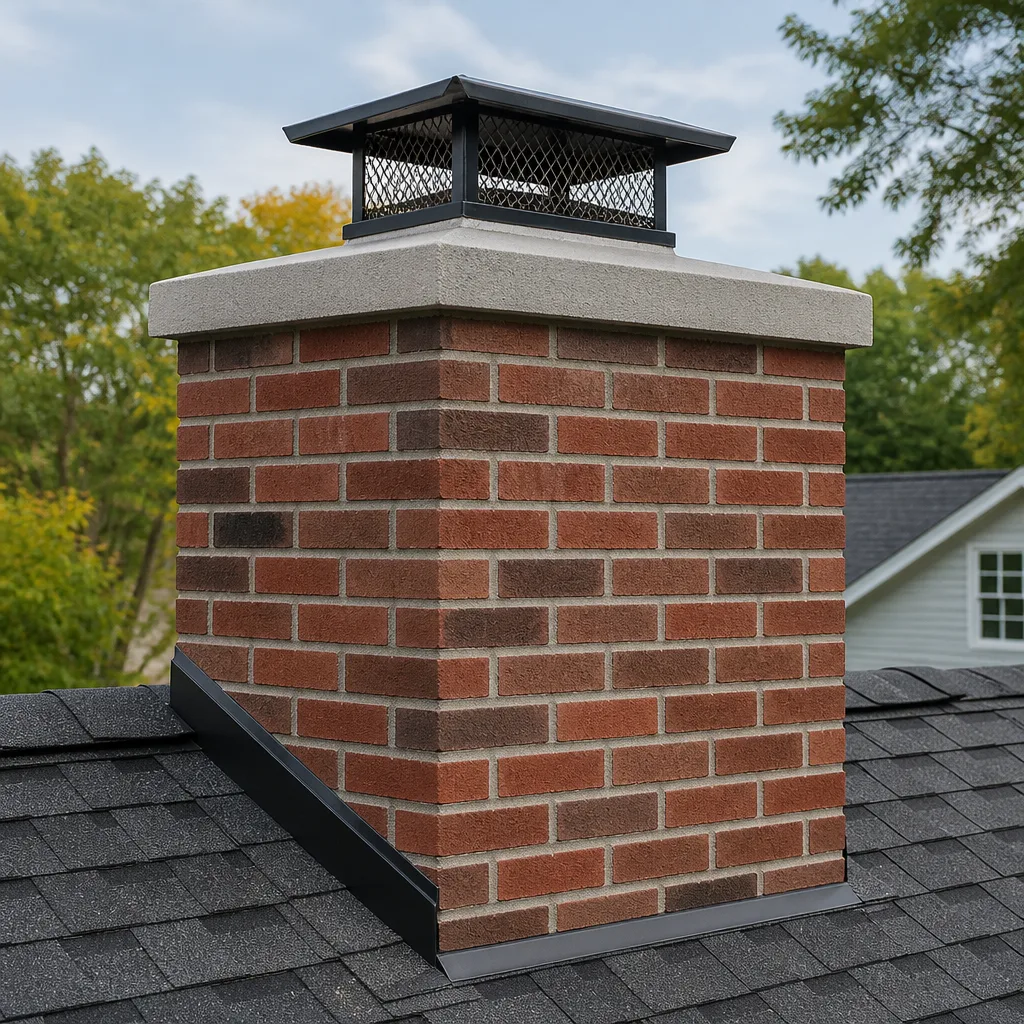 Caps & crowns
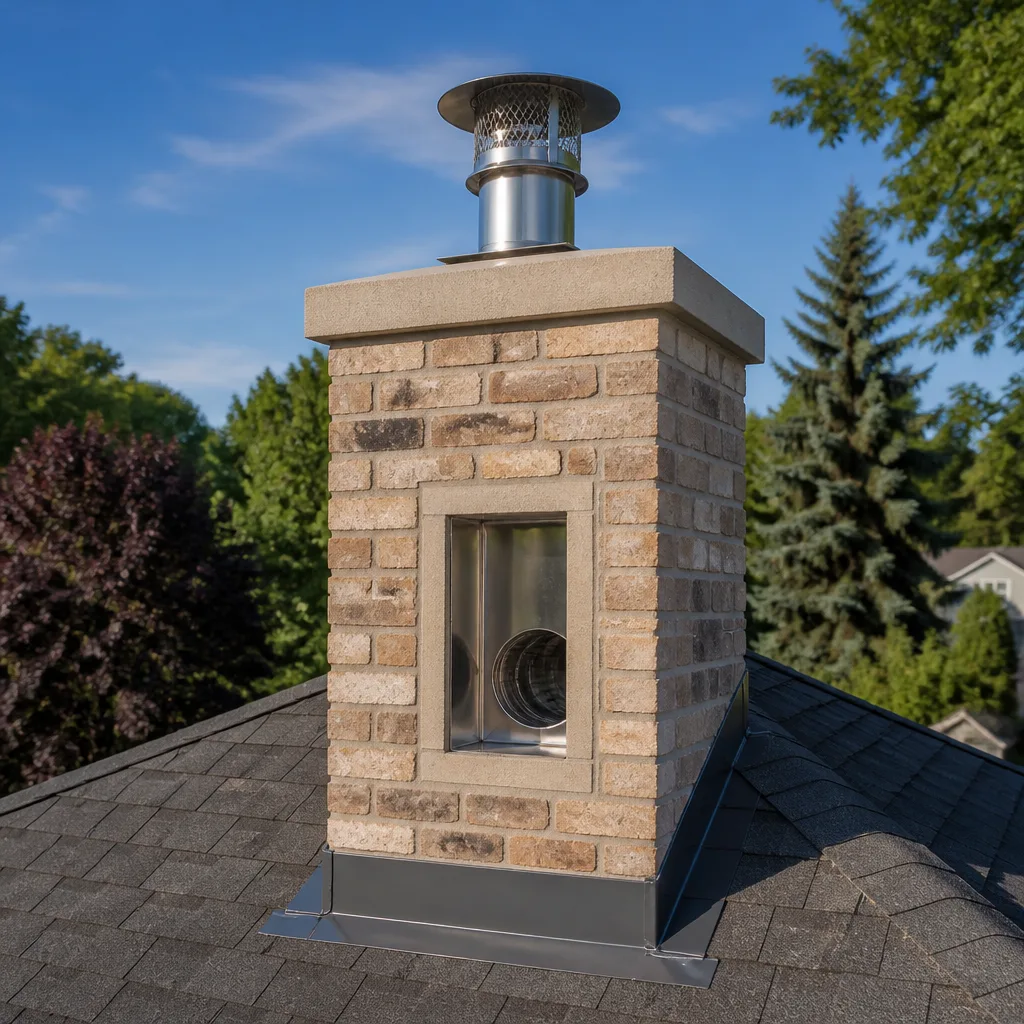 Flue relining
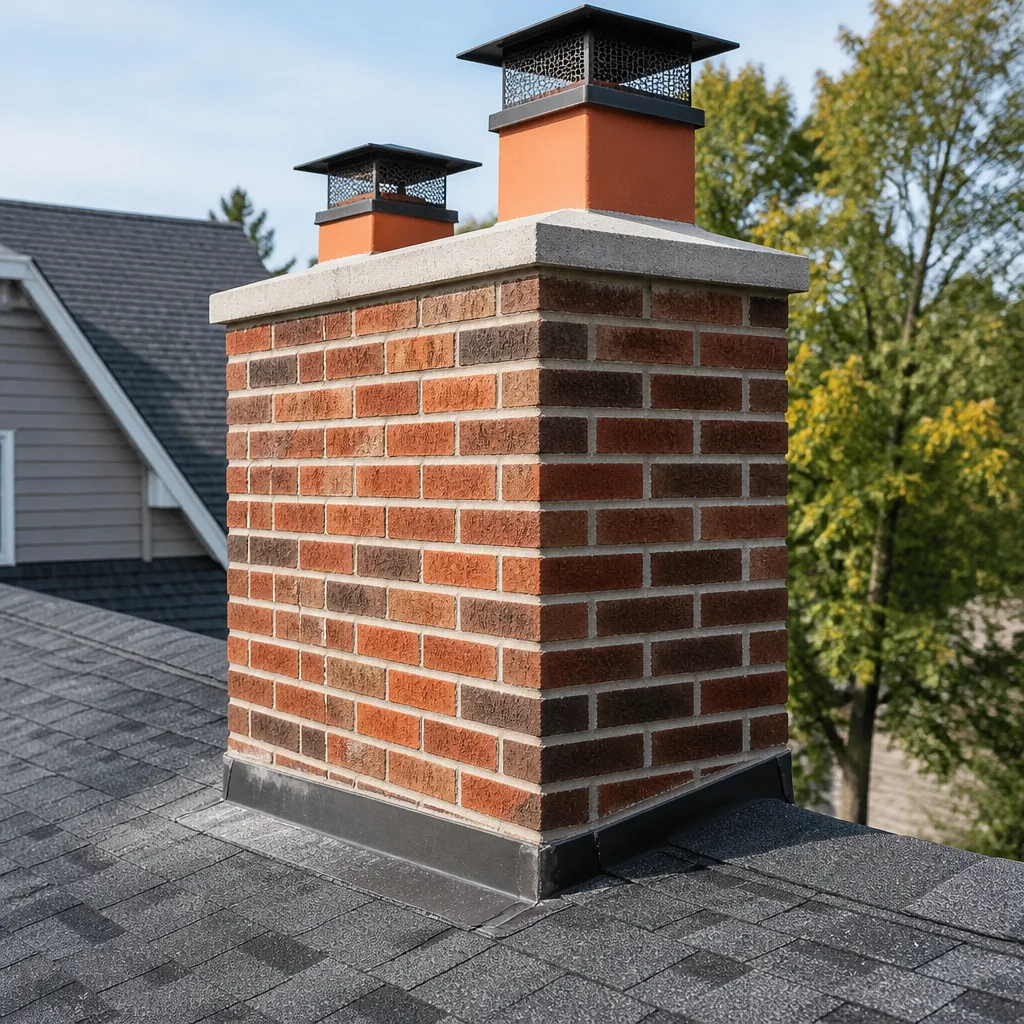 Masonry repair
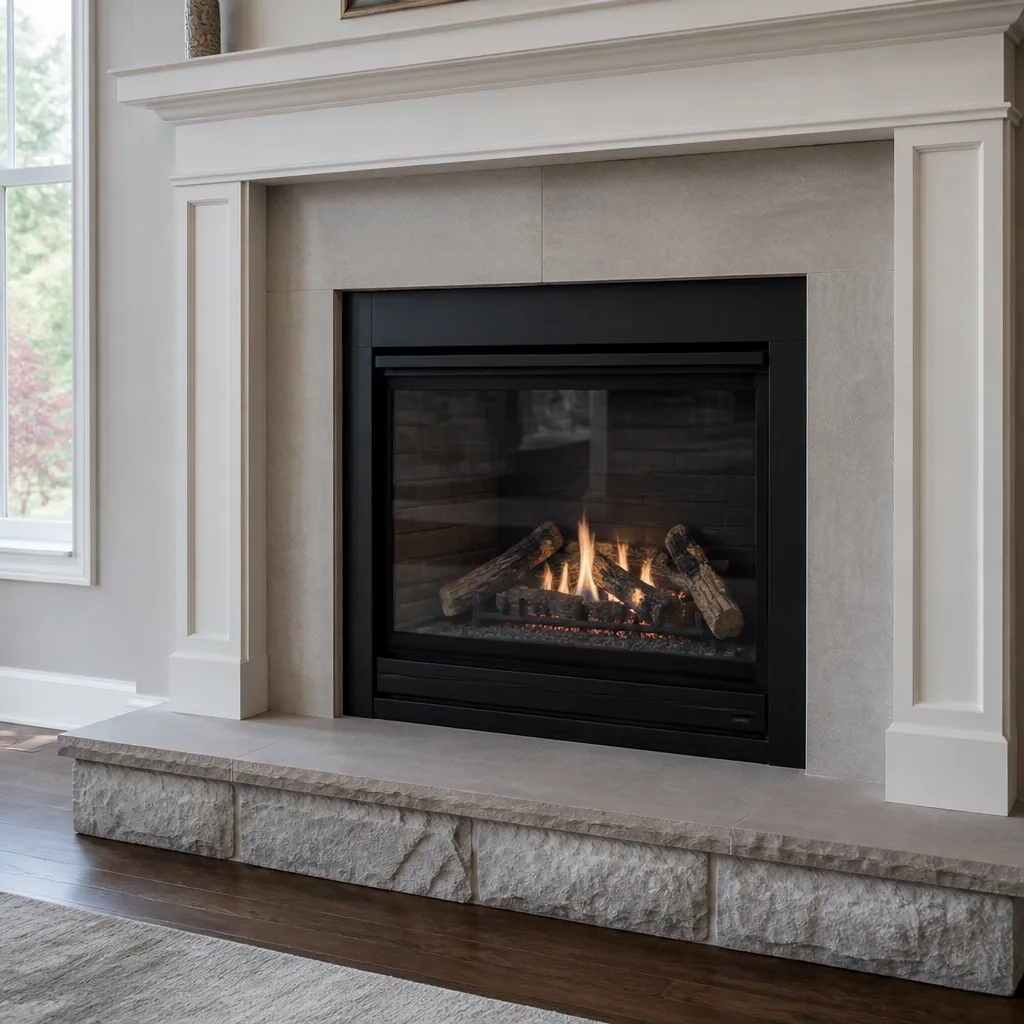 Gas fireplace service
Level 1 sweep and inspection to the NFPA 211 annual standard - flue, crown, cap, and flashing checked and photographed
Chimney sweep logs do not sweep chimneys. They loosen some creosote - which then falls where a brush and vacuum still have to collect it.
Chimney Sweep Maintenance Checklist for Arlington Homeowners
If you burned fewer than 20 fires last season using seasoned hardwood, your chimney probably doesn’t need a full sweep yet, but it may still need an inspection. Conflating the two is one of the most common reasons Arlington homeowners either overspend or miss a real problem. A calendar date tells you nothing about what’s actually inside your flue. What tells you something is your burn habits, the wood you use, how the firebox looks after a cold snap, and what’s happening on the outside of the chimney after a Texas summer. This guide lays out a condition-based checklist you can use to decide whether to book a cleaning, an inspection, or nothing at all. You’ll learn how to read the signs your chimney gives you, what you can safely check yourself, and when to bring in a specialist.
Quick Answer
A chimney maintenance checklist should be driven by how much you actually burn, not by a fixed annual date. In Arlington’s mild winters, most homeowners who burn under a cord of seasoned wood per season need a sweep every two to three years and an inspection each year before the first fire. Homes that burn more, burn green wood, or have an older unlined flue should be checked every season. The list below walks you from burn count through exterior signs, interior checkpoints, and post-summer risks.
Styles & brands we work with
- Sweep & inspection
- Caps & crowns
- Flue relining
- Masonry repair
- Gas fireplace service
Table of Contents
- How to Calculate Whether You Need a Sweep or Just an Inspection
- Exterior Signs Arlington Chimneys Give You
- Interior Checkpoints You Can Check Safely
- The First Fire After Summer: What’s Actually at Risk
- The Burn Log That Improves Every Future Sweep
- Wood Choice, Storage, and What Goes Down the Flue
- Best Time to Book in Arlington
- Common Mistakes to Avoid
How to Calculate Whether You Need a Sweep or Just an Inspection
Here’s the quick version: if you burned fewer than 20 fires last season using seasoned hardwood, book an inspection. If you burned 20 to 50 fires, book an inspection and be prepared for a sweep once the technician sees inside. Over 50 fires, or any fire with wet or green wood, and you should plan on a full sweep. That’s the threshold system, and it beats a calendar reminder because it reflects your actual use.
Why the distinction matters: an inspection looks at the whole system. It examines creosote buildup, flue condition, damper operation, cap integrity, and the firebox. A sweep is the physical removal of creosote and soot. You can’t sweep without inspecting first, but you can absolutely inspect without sweeping. Homes that burn lightly often need only the inspection – the sweep is a recommendation, not a default.
To use the threshold system, count your fires from last season. If you don’t remember, estimate by how many bundles of wood you went through. A cord is 128 cubic feet, roughly a 4-by-4-by-8 stack. Most Arlington homes burning a fireplace three or four evenings a week from December through February land under half a cord. That level of use is often inspection-only territory for the first year or two, then a sweep on the third.
Other factors that push you toward a sweep sooner:
- Wood that wasn’t fully seasoned (sizzles or hisses when burned, dark smoky fires)
- Dampers left partially open, which slows draft and lets creosote condense
- An older, unlined flue where creosote adheres faster to masonry
- Burning paper, cardboard, or treated wood, which leaves tougher deposits
- A heavily cracked or spalling firebox where ash and debris collect
If your flue is unlined or the liner is compromised, a sweep alone won’t fix the underlying problem. That’s where a structural fix like a HeatShield flue resurfacing or a Thrive Chimney Sweep DuraFlex liner installation comes in. Those are repair solutions, not maintenance, and they’re determined by what the camera finds.
Exterior Signs Arlington Chimneys Give You
Walk outside your house and look at the chimney stack. Arlington brick and mortar give you three clear signals if you know what you’re reading. None of them require climbing onto the roof, and none of them mean you need to panic – they just tell you it’s time to look inside.
Efflorescence on the brick
Efflorescence is the white, chalky powder that appears on brick or mortar when moisture moves through the masonry and leaves mineral salts behind as it evaporates. A light dusting near the top of the stack is common after a wet spring. Heavy, recurring efflorescence on the chimney body, though, points to water getting into the flue or behind the brick. That’s worth flagging at your next inspection, because moisture and creosote together are harder to clean and speed up liner deterioration.
Mortar joint color change
Original mortar is a consistent light gray or tan. Dark, stained, or gummy-looking mortar joints – especially near the top of the stack or around the flue tile – usually mean water has been soaking in and hasn’t been able to dry. If the joints are crumbling when you press them with a screwdriver, that’s deeper deterioration that a chimney repair specialist should look at before it gets worse.
Crown cracking from summer heat cycles
The concrete crown on top of the chimney is designed to shed water away from the flue. Texas summers bake it, afternoon storms cool it fast, and over enough seasons that expansion and contraction opens hairline cracks. Small cracks can seal. Larger cracks wider than a quarter inch, or a crown that looks tilted or separated, let water straight down the flue. That’s a repair item, and it’s the kind of thing an inspection catches before it becomes an interior problem.
Other exterior checks worth a look:
- Chimney cap: is it still bolted on, is the mesh intact, no birds nesting?
- Flue tile at the top: are the tiles cracked or do they look spalled?
- Spark arrestor: rusted or clogged with debris?
- Any obvious lean to the stack – rare, but worth a photo to show your sweep.
Take a few phone photos from the ground and label them by date. Those are useful reference points when someone inspects the chimney and asks whether the crack was there last year.
Interior Checkpoints You Can Check Safely
Here’s what you can check yourself without risking a fall or a burn. Do these with the fire out and the fireplace cold, ideally the morning after a fire has fully died. If your fireplace has a gas log set, turn the gas off at the valve before you look.
Firebox floor
The firebox floor takes the most heat. Look for cracks, crumbling mortar, or missing firebrick. Small hairline cracks in the rear firebrick are common and often cosmetic. Wide cracks, or bricks that shift when you press them gently, are not. If you can see daylight through a crack in the firebox wall, stop using the fireplace until it’s inspected.
Damper operation
Open and close the damper fully by hand. It should move smoothly, seat flush against the frame when closed, and open to a clear, unobstructed path. If it sticks, doesn’t fully open, or leaves a gap when shut, that affects both draft and heat loss. A partially open damper is also one of the reasons creosote builds up faster than it should.
Smoke shelf access
The smoke shelf is the ledge just behind the damper that redirects smoke up the flue. Reach up with a flashlight (again, fireplace cold) and look for soot accumulation, nests, or debris that’s fallen down. A mirror and flashlight combo works well here. If you can’t get a clear view, that’s normal – mention it to your sweep so they check it with a camera.
Doors, screens, and gaskets
On a glass-front fireplace, check that the door gaskets seal and the latch holds. Worn gaskets let air in uncontrolled, which changes how the fire burns and can push smoke into the room.
What you should NOT do: climb onto the roof, reach into the flue, use a brush from below to “test” it, or try to clean the firebox with a shop vacuum. Soot is fine to touch with a gloved hand but should not be stirred up indoors. And never attempt to inspect or service a chimney flue liner or cap from a ladder – that’s a job for someone with the right equipment and training. Our technicians have up to 12 years of experience and can check every one of these points with a camera and photo report, so you see exactly what they see.
The First Fire After Summer: What’s Actually at Risk
Your chimney sat unused from roughly March through November in Arlington. That’s eight months of nesting, debris, and settled soot. The first fire of the season is when problems show up. Here’s what’s worth doing before you light it.
The specific risks to consider after a summer of disuse:
- Animal or bird nests in the flue. Chimney caps help, but a cap with compromised mesh lets starlings and squirrels in. A blocked flue means smoke and carbon monoxide come back into the house, not up the stack.
- Debris fallen onto the smoke shelf or damper. Leaves, twigs, and soot chunks accumulate. If the damper won’t open all the way, that’s often why.
- Creosote that dried and hardened over summer. Creosote is more combustible in its later stages, and hardened deposits from last season are exactly what you don’t want igniting on the first fire.
- Water intrusion damage that started in spring. If the crown cracked in May and the chimney’s had six months of storms, the firebox may show moisture damage you didn’t see in winter.
- Draft issues from a cold flue. A cold flue drafts poorly for the first few minutes. That’s normal, but if smoke consistently rolls back into the room, it’s not a cold-flue issue – it’s a problem worth inspecting.
Practical steps before that first fire:
- Open the damper and shine a light up the flue. If you see a nest or a blockage, don’t light anything. Call a specialist.
- Crack a window for the first fire, and light a rolled newspaper held near the damper to warm the flue before lighting the wood.
- Have a working carbon monoxide alarm on the same floor as the fireplace. Test it. This is non-negotiable in any home with a chimney.
- Check the firebox and smoke shelf as described above.
- Book the inspection before the first cold snap, not after. Arlington’s chimney professionals get busy as soon as the first real cold front moves through in late November or December.
If you skipped last season’s inspection, make the appointment before the first fire rather than after. That’s the whole point of a pre-season check – it catches a blocked flue or a cracked crown while it’s still fixable without a full rebuild.
The Burn Log That Improves Every Future Sweep
Here’s a simple practice most homeowners don’t do: keep a burn log. It takes two minutes per fire and gives your sweep real data instead of a guess, which directly changes what cleaning is recommended. A sweep who knows you burned 40 fires with two-year-seasoned oak can tell you whether you’re at the threshold. A sweep who has to guess can’t.
What to log:
- Date of each fire
- Approximate burn duration
- Wood type (oak, pecan, cedar, mixed)
- Whether the wood was seasoned (dried at least a year) or green
- Any smoke in the room during the fire
- Damper position and any draft issues noticed
- Any unusual smells (a sharp creosote smell, or a smoky smell when the fire is out)
At the end of the season, tally it. Under 20 fires, seasoned wood, no smoke issues: inspection-only. Over 50 fires, or any green wood burned, or repeated smoke problems: sweep, and consider a camera inspection to look at the flue above the damper.
Keep the log in the same place as your carbon monoxide alarm – maybe the mantel or a note on your phone. If you switch wood sources mid-season, add a line. Your sweep will use it, and the recommendation you get back will be more accurate because of it.
A log also protects you from overspending. When a technician has your numbers, they can tell you squarely whether a sweep is needed this year or next. We tell you exactly what we find and what it means – no scare tactics, no vague recommendations – and a burn log supports that conversation.
Wood Choice, Storage, and What Goes Down the Flue
The wood you burn affects creosote more than any other single variable. Seasoned hardwood – oak, pecan, ash – burns hot and clean. Green or wet wood burns cool and smolders, and a cool, slow fire is what deposits creosote on the flue walls. In Arlington’s mild winters, a lot of homeowners keep a mixed cord stacked in the yard and burn whatever is driest that week, which is fine until it isn’t.
Here’s how to tell seasoned from green without a moisture meter, though a cheap moisture meter is well worth having:
- Weight: seasoned wood is lighter than a same-size piece of green wood.
- Sound: two seasoned pieces knocked together make a clear, hollow clack. Green wood thuds.
- Look: seasoned wood has grayed, checked ends and visible cracks radiating from the center. Green wood looks pale and fresh.
- Burn: seasoned wood lights easily, burns with visible flame, and doesn’t sizzle. Green wood hisses and steams.
Ideal moisture content for firewood is around 15 to 20 percent. Green wood runs 30 percent or more. Seasoning takes six to twelve months, more for oak. Stack your wood off the ground, with the top covered and the sides open to airflow, ideally not against the house. Wood stacked tight against a wall holds moisture and attracts pests.
What not to burn: pressure-treated lumber, painted wood, cardboard, wrapping paper, plywood scraps, or Christmas trees. Those leave chemical deposits and can damage the firebox and liner in ways that are expensive to repair. Opt for plain, untreated, split hardwood. Your flue will thank you, and any sweep who inspects the flue will see the difference immediately.
If you ever notice a sharp, acrid, or fuel-like smell from the chimney, stop using the fireplace and call a specialist. That smell is not normal, and it’s not something to burn through.
Best Time to Book in Arlington
Book your inspection in October or early November, before the first cold snap, not after. Chimney services fill up quickly once the first real cold front pushes through Arlington in late November, and a pre-season appointment catches problems while the schedule is open and the weather is workable for any exterior repairs. If you wait until December, you’ll be booking into January and possibly playing catch-up.
If you burn heavily, consider a second lighter check in late February, after the season’s over. That’s when you’d want a sweep that addresses two things:
- Creosote that accumulated through the cold months, before it has all summer to harden
- Any water damage that started with a winter storm and needs repair before summer heat cycles make it worse
Summer isn’t a bad time to book either. Exterior repairs – crown sealing, cap replacement, brick and mortar issues – can be done in dry weather. And the schedule is quieter. If you’re calling in July for a fall appointment, that’s a homeowner who’s ahead of the curve, not late.
For homes with a dryer vent as well, pair it with the chimney appointment. Thrive handles dryer vent cleaning alongside chimney service, and both are about fire safety in the same house. Dryer vent cleaning to NFPA fire-safety standards is a maintenance item, like the chimney sweep, that most homeowners put off too long. Getting both done in one visit is practical and cost-effective.
Common Mistakes to Avoid
- Treating the annual sweep as mandatory. A sweep every year is often unnecessary for light-burners. Skipping the inspection because you “got it cleaned last year” is the bigger mistake. Inspection and sweep are two different things, and one doesn’t cover the other.
- Ignoring exterior brick signs until winter. Efflorescence and hairline crown cracks are cheap to address early. Left through repeated Arlington summers and storms, they turn into a masonry repair. Walk around the chimney once in spring and once in fall.
- Burning green or unseasoned wood because it’s cheaper. The money saved on wood comes back as creosote and a sooner sweep. Seasoned hardwood is the whole equation.
- Not testing the carbon monoxide alarm before the first fire. A blocked flue with a working fire is a carbon monoxide event. Test it, and replace the battery at every daylight saving time change.
- Booking exterior repairs separately from the sweep. A sweep-only company can’t repair a cracked crown. You’ll end up coordinating two contractors. Thrive handles cleaning, resurfacing, liner installation, and structural repair under one call, using professional-grade materials from brands like HeatShield, Gelco, Olympia Chimney, and Famco.
- Lighting a fire without checking the damper. It’s two seconds. Open it fully, look up the flue with a light, close it if you see anything blocking the flue. If in doubt, don’t light it.
- Using the chimney as a household exhaust. Plastic, wrapping paper, cardboard, treated wood – none of it belongs in a fireplace. The flue handles smoke, not trash.
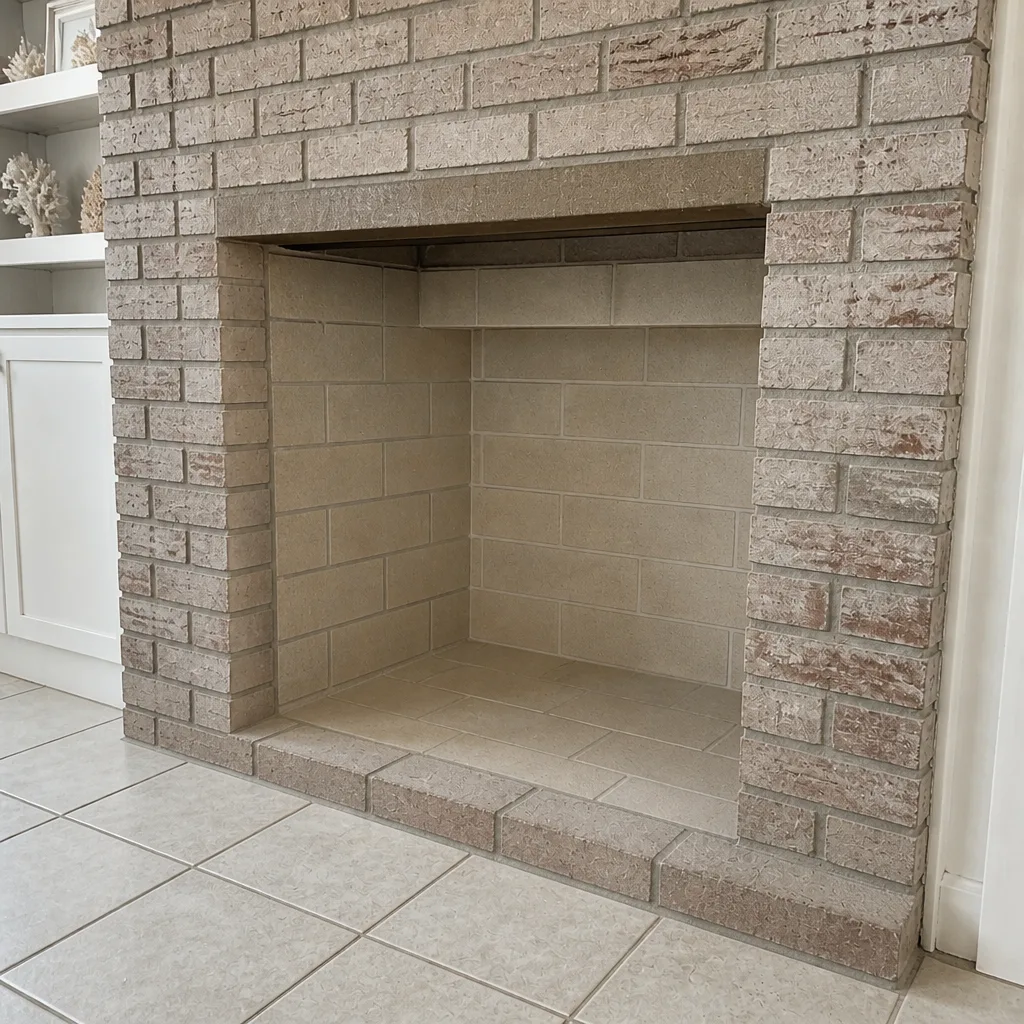
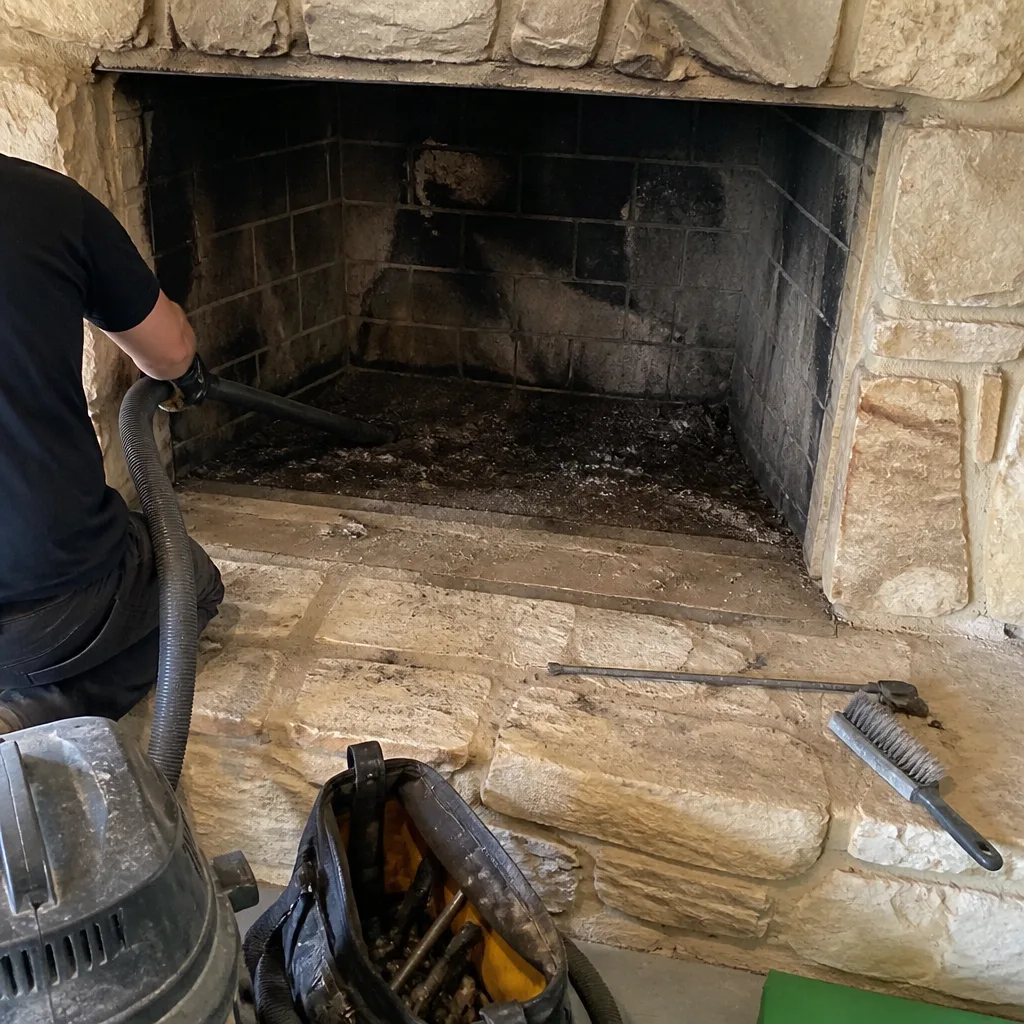
See the difference
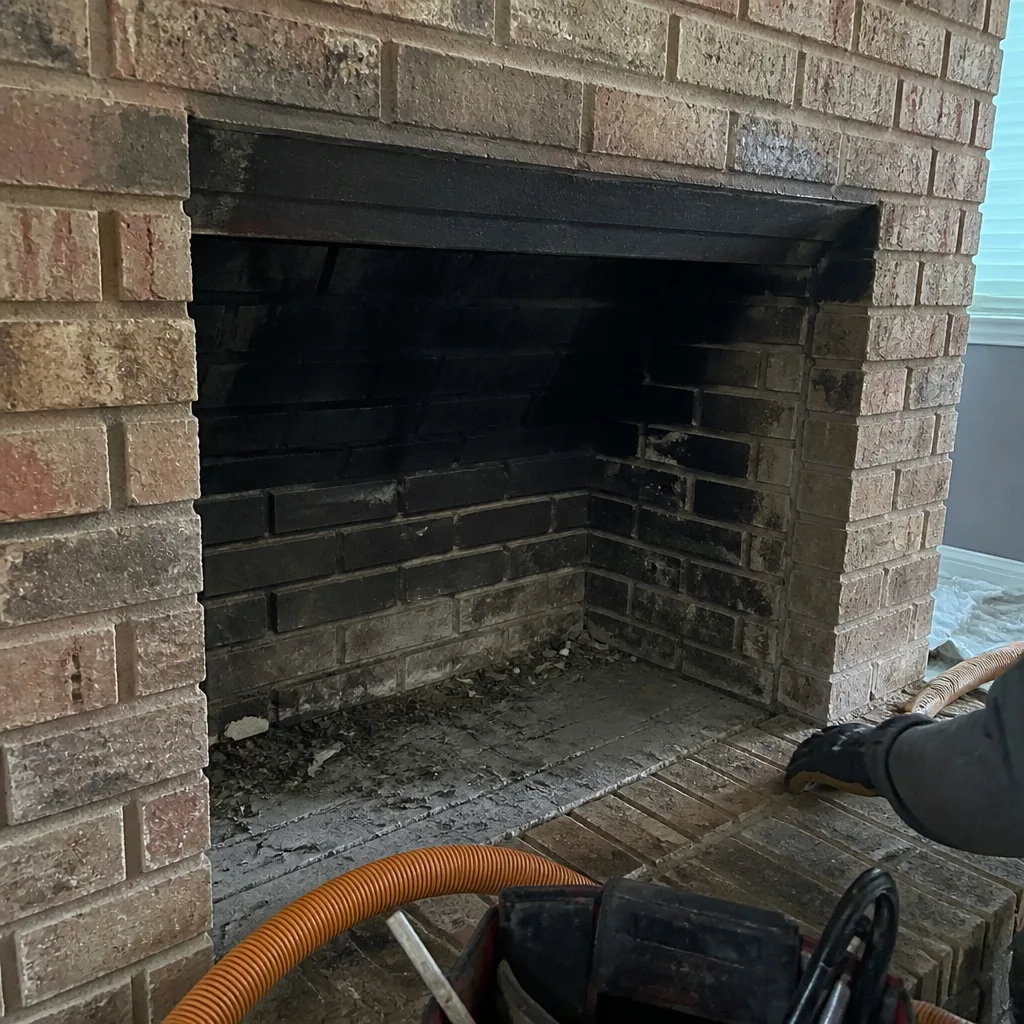 Before
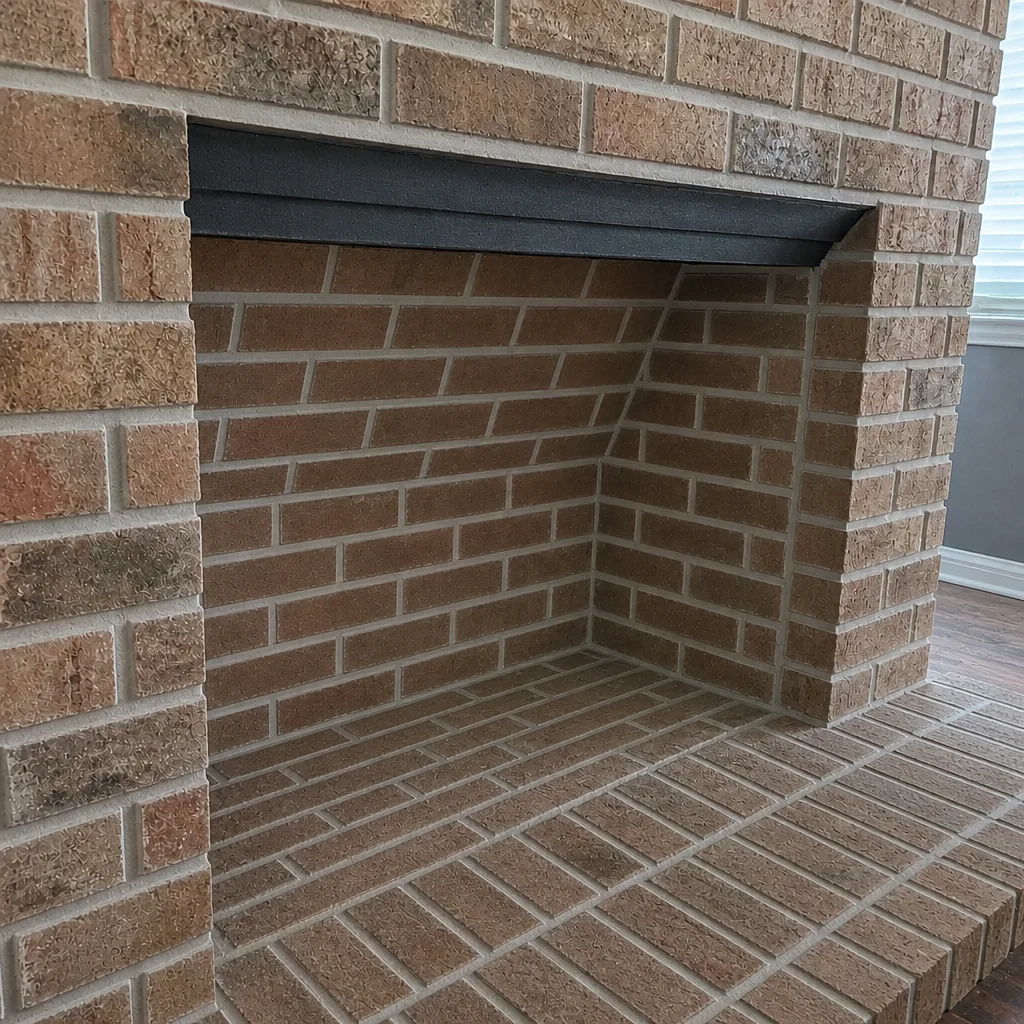 After
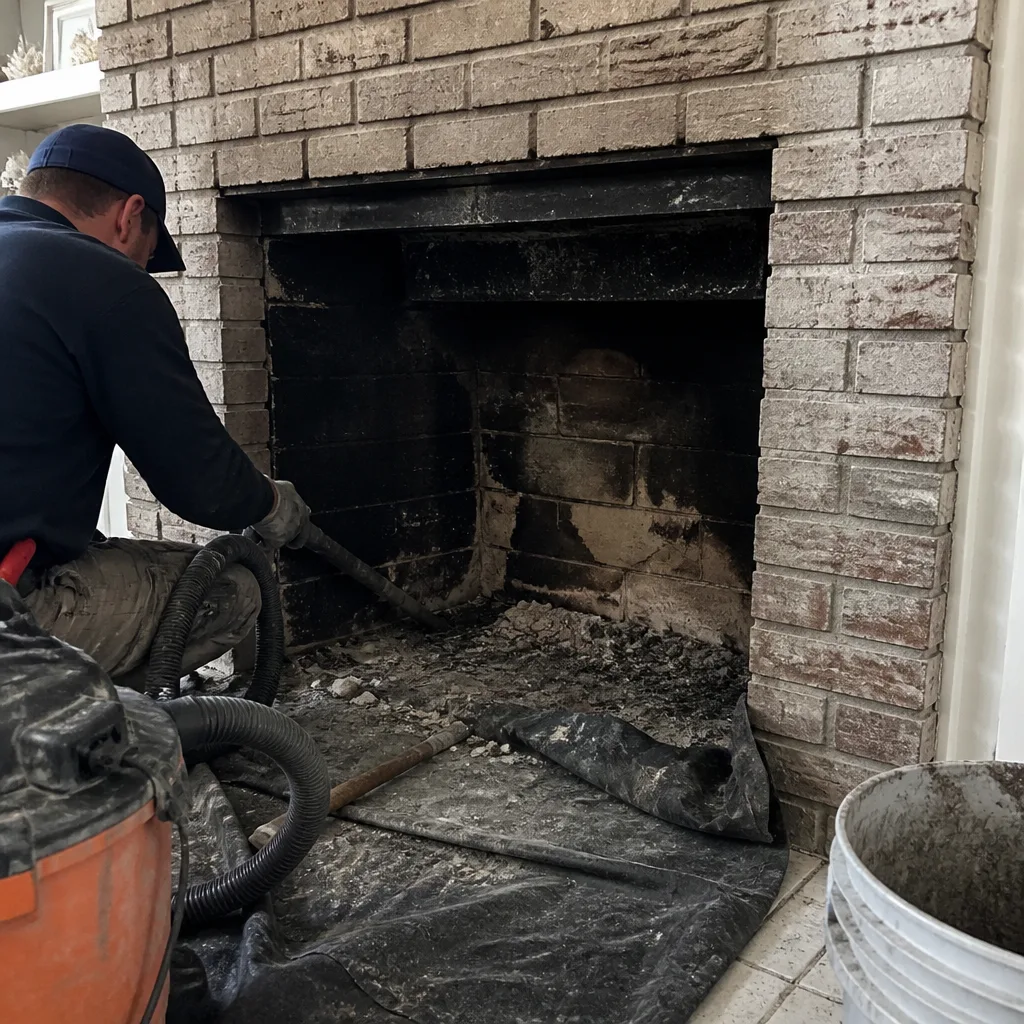 Before
 After
 Before
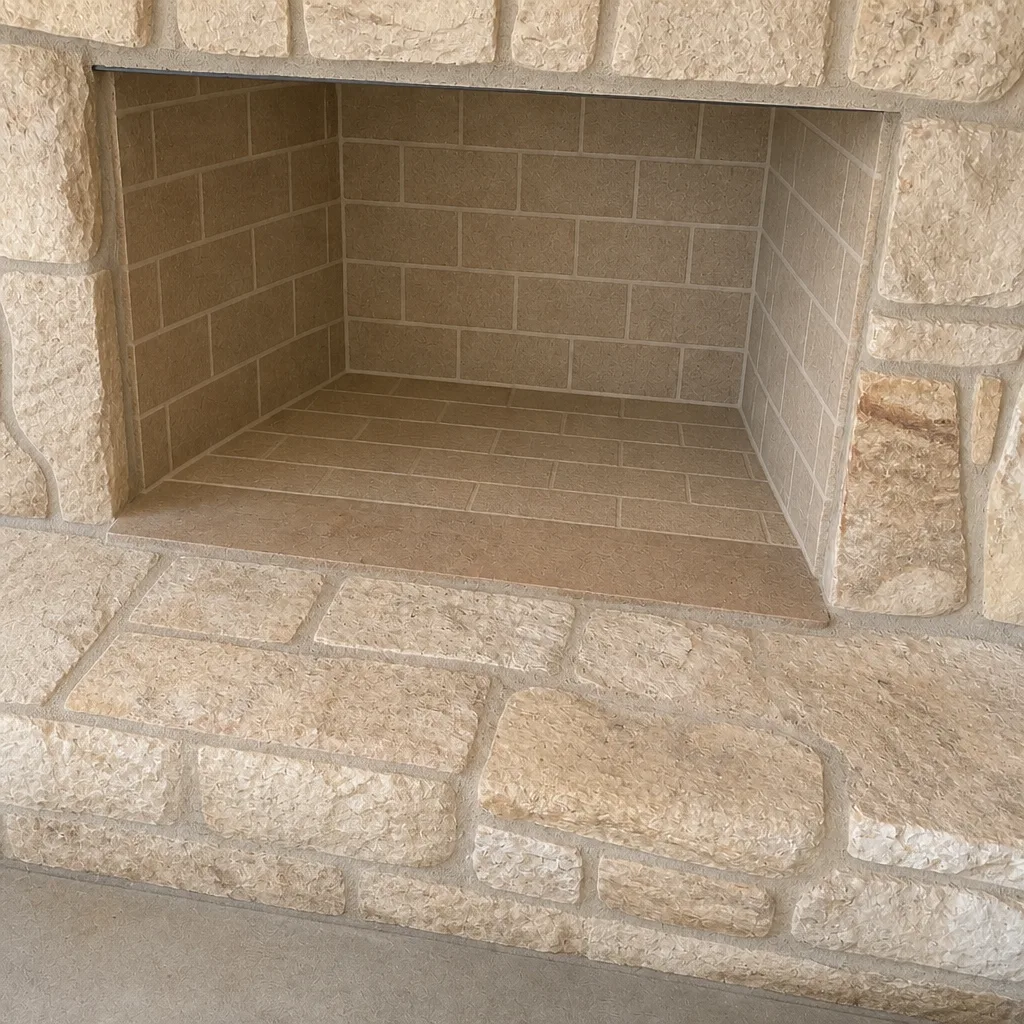 After
When to Call a Professional
Call a professional chimney specialist if you see daylight through a crack in the firebox, if the damper won’t fully open, if you smell creosote or fuel odor indoors, if smoke rolls back into the room on a normal fire, or if the exterior brick shows recurring efflorescence or a crown you can see has cracked. Call if you haven’t had an inspection in two or more seasons, or if you’ve moved into a home with a fireplace you didn’t inventory. Call if your flue is unlined or your liner looks deteriorated – that’s a structural issue, not a maintenance one. And call if your carbon monoxide alarm has ever gone off. For Arlington-area homeowners, we work across Arlington on chimney sweeps and chimney repair, and dryer vents on the same visit if needed. Thrive Chimney Sweep offers free estimates – call (866) 942-6157. We answer 24/7. Fast dispatch from 7am to 7pm, Sunday through Friday.
Frequently Asked Questions
The honest answer is that it depends on how much you burn. A light-burner using fewer than 20 fires a season on seasoned hardwood may need a sweep only every two to three years. A heavy-burner with 50 or more fires per season, or a household burning any green or wet wood, should plan on a sweep each season. The only way to know for sure is an inspection, which looks at creosote buildup directly. Call (866) 942-6157 for an exact quote on a sweep or inspection – estimates are free.
A sweep physically removes creosote and soot from the flue and firebox. An inspection examines the whole system – flue, liner, damper, cap, firebox, exterior – to make a recommendation. You can’t sweep without inspecting first, but inspection often stands alone. Homeowners who book “a sweep” without asking which they need either overspend on a cleaning they didn’t require, or skip a needed inspection. When you book with Thrive, we explain which service applies to your chimney and why.
Only a camera inspection can tell you that. A liner is a structural component, and it fails when it cracks, gaps, or detaches from the flue. If your flue is unlined, or if the camera shows deterioration, liner work is a repair, not an upsell. What you should insist on is seeing the camera evidence before you commit to liner work. We don’t recommend anything we can’t show you in a photo report. And there are cases where liner work can safely wait a season – we’ll tell you when it can.
Two risks build up: creosote and carbon monoxide. Creosote is a byproduct of burning wood, and it’s combustible. A heavily loaded flue is a chimney fire waiting for the right conditions. A blocked or partly blocked flue can push carbon monoxide into the living space instead of venting it up the stack. Skipping one season is usually not a catastrophe. Skipping several, especially with heavy burning or wet wood, is the situation you don’t want to be in. Call (866) 942-6157 for an exact quote – estimates are free.
Three signals you can see from the ground: white chalky efflorescence on the brick, dark or crumbling mortar joints near the top of the stack, and cracks in the concrete crown on top. Inside, water damage shows up as a damp smell in the firebox, rusted damper components, or flaking firebrick. If you see any of these, get an inspection before the next season. Repair is usually cheaper when caught at the crack stage than after a masonry rebuild.
Yes, and it’s a practical pairing. Both are ventilation systems, and both are fire-safety items. Thrive handles chimney sweeping, chimney repair, and chimney sweep service lines (cleaning, inspection, and repair) alongside dryer vent cleaning. Having both checked in one visit means you’re not coordinating separate contractors, and the same person can flag an issue in either system while they’re already at the house.
The Bottom Line
A chimney maintenance checklist works when it’s built on conditions, not the calendar. Count your fires, note the wood you burned, walk the exterior for efflorescence and crown cracks, check the damper and firebox yourself, and log it all. That data tells your sweep exactly what’s needed – a full cleaning, an inspection, or nothing. Book before the first cold snap, test the carbon monoxide alarm, and never ignore smoke rolling into the room. If you’re not sure which visit you need, an inspection is the safe starting point. Thrive Chimney Sweep works across Arlington on chimney sweeps, repairs, and dryer vent cleaning, using professional-grade materials. Call (866) 942-6157 for a free estimate.
Ready to book a condition-based sweep or inspection? Call (866) 942-6157 for a free estimate. We answer 24/7. Fast dispatch from 7am to 7pm, Sunday through Friday.
Written by the team at Thrive Chimney Sweep.